
- Vintage Sterling Silver
- Closure
- Material
- 925 Sterling Silver (8)
- Coral (16)
- Enamel (44)
- Gemstone (381)
- Gemstone, Metal (19)
- Gemstone, Stone (23)
- Glass (19)
- Metal (222)
- Metal, Gemstone (10)
- Metal, Stone (42)
- Mixed Materials (10)
- Silver (80)
- Solid Silver (23)
- Sterling Silver (263)
- Stone (550)
- Stone & Metal (16)
- Stone, Gemstone (26)
- Stone, Metal (12)
- Turquoise (74)
- Unknown (19)
- Other (2357)
- Metal
- .925 Sterling Silver (3)
- 925 Silver (3)
- 925 Sterling Silver (6)
- Brass (7)
- Fine Silver (10)
- Rose Gold (2)
- Rose Gold Plated (5)
- Silver (360)
- Silver Plated (12)
- Sterling Silver (2960)
- Sterling Silver .925 (2)
- Sterling Silver 925 (5)
- Sterling-silver (3)
- White Gold (2)
- White Gold Plated (34)
- Yellow Gold (7)
- Yellow Gold Plated (26)
- Other (767)
- Necklace Length
- Pendant Shape
- Signed
Vintage Taxco Sterling Silver Abalone Fish Brooch EHC Eagle 2 Hallmark 4.87 G
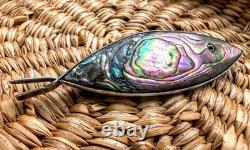
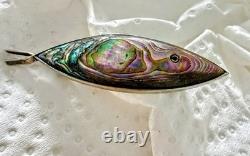
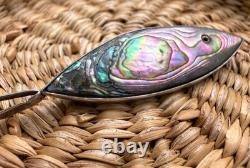
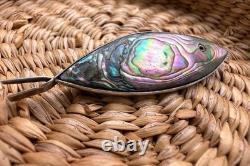
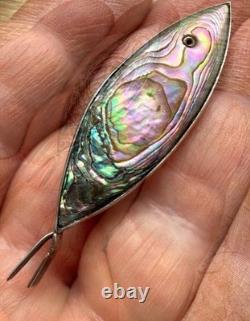
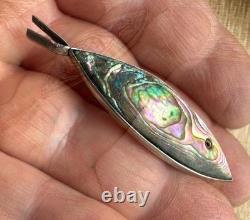

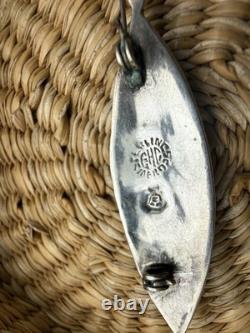
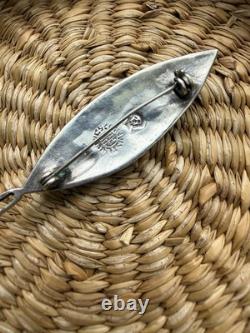
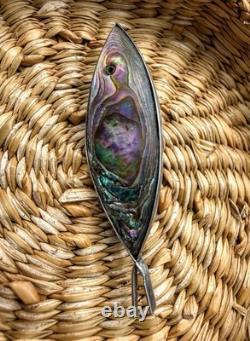
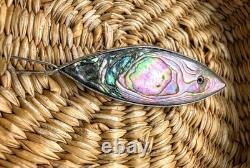
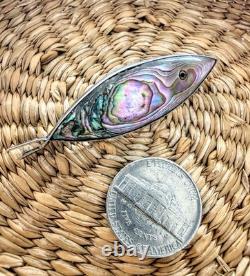
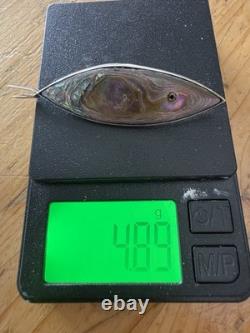
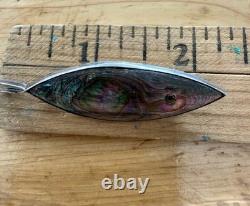
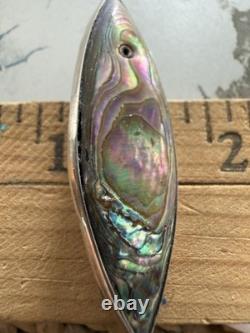
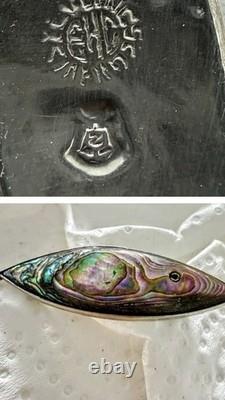
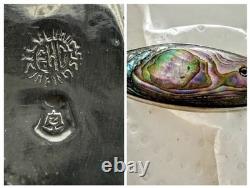
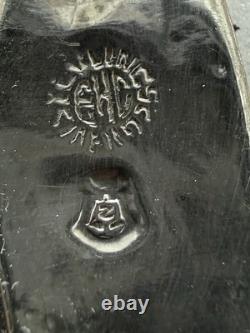
Vintage Taxco Sterling Silver Abalone Fish Brooch Signed EHC Eagle 2 Hallmark, 4.86g Mid Century Mexican Modernist Pin, Iridescent Shell Inlay. Rare Artisan-Signed Taxco Fish Brooch with Vibrant Abalone Inlay. Elevate your vintage jewelry collection with this exquisite mid-century modern fish brooch, handcrafted in the silver mecca of Taxco, Mexico. This piece features a stunning, high-luster abalone shell inlay that radiates a full spectrum of iridescent greens, purples, and blues. Artisan Signed: Features the coveted "EHC" maker's mark and the official "Eagle 2" government assay stamp, dating the piece to the golden era of Taxco silver c. Collector's Weight: Weighs a substantial 4.86 grams, offering a high-quality feel compared to lighter souvenir versions. Design: A sleek, minimalist "Modernist" fish silhouette that perfectly captures the 1950s-60s Mexican aesthetic. The abalone shell is secure with no cracks or chips. The silver retains a beautiful natural patina that highlights the hand-stamped hallmarks on the reverse. The original pin back and clasp are fully functional and secure.
This piece belongs to the. "Mexican Silver Renaissance, " a pivotal era in 20th-century design when Taxco, Mexico, transformed from a declining mining town into a global capital for avant-garde silver artistry. Your brooch was crafted during the height of this renaissance. The era's history is defined by several key elements. The Government "Eagle" System (1948): In 1948, the Mexican government introduced the eagle hallmark to regulate silver quality and identify makers for export.
The "Eagle 2" Stamp: On your piece, the number "2" inside the eagle silhouette refers to the specific registration number assigned to the workshop. While generic community stamps existed e. "3" for Taxco, "1" for Mexico City, specific low numbers like "2" often identify prominent early workshops or designers. Modernist Movement: Designers in this era moved away from traditional European filigree.
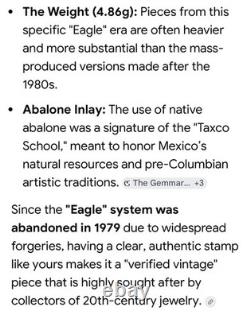
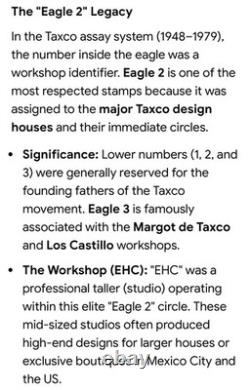
They instead embraced Modernism, characterized by the sleek, streamlined shapes and bold, geometric forms seen in your fish's silhouette. The "EHC" Maker: The circular "EHC" stamp is the artisan's signature. In Taxco, these workshops often functioned as "talleres" (studios) where master silversmiths trained under legends like William Spratling or the Castillo brothers. During the mid-century, Taxco silver became a favorite of Hollywood elite and international intellectuals. Figures like Frida Kahlo and Marilyn Monroefamously wore bold Mexican silver, helping it gain status in museums and high-end boutiques like Saks Fifth Avenue. Los Angeles County Museum of Art (LACMA)Los Angeles County Museum of Art. The Weight (4.86g): Pieces from this specific "Eagle" era are often heavier and more substantial than the mass-produced versions made after the 1980s.Abalone Inlay: The use of native abalone was a signature of the "Taxco School, " meant to honor Mexico's natural resources and pre-Columbian artistic traditions. Since the "Eagle" system was abandoned in 1979 due to widespread forgeries, having a clear, authentic stamp like this one makes it a "verified vintage" piece that is highly sought after by collectors of 20th-century jewelry While the specific registration for. "EHC"is part of a "lost" historical record (Taxco's official registration books were unfortunately destroyed in a natural disaster), its combination with the Eagle 2 hallmark tells a prestigious story. Eagle 2 is one of the most respected stamps because it was assigned to the major Taxco design houses and their immediate circles. Significance: Lower numbers (1, 2, and 3) were generally reserved for the founding fathers of the Taxco movement.
Eagle 3 is famously associated with the Margot de Taxcoand Los Castillo workshops. The Workshop (EHC): "EHC" was a professional taller (studio) operating within this elite "Eagle 2" circle.These mid-sized studios often produced high-end designs for larger houses or exclusive boutiques in Mexico City and the US. Historical Context: The "Abalone" Craze.
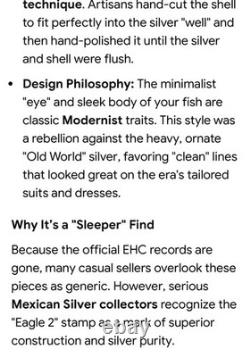
This brooch dates to the 1950s-1960s, an era when Taxco artists were obsessed with "petersita" (the local term for high-quality abalone inlay). The Technique: Unlike modern "glue-in" jewelry, pieces from the EHC/Eagle 2 era used a sophisticated inlay technique. Artisans hand-cut the shell to fit perfectly into the silver "well" and then hand-polished it until the silver and shell were flush. Design Philosophy: The minimalist "eye" and sleek body of this fish are classic Modernist traits. This style was a rebellion against the heavy, ornate "Old World" silver, favoring "clean" lines that looked great on the era's tailored suits and dresses. Why It's a "Sleeper" Find. Because the official EHC records are gone, many casual sellers overlook these pieces as generic. However, serious Mexican Silver collectors recognize the "Eagle 2" stamp as a mark of superior construction and silver purity.